

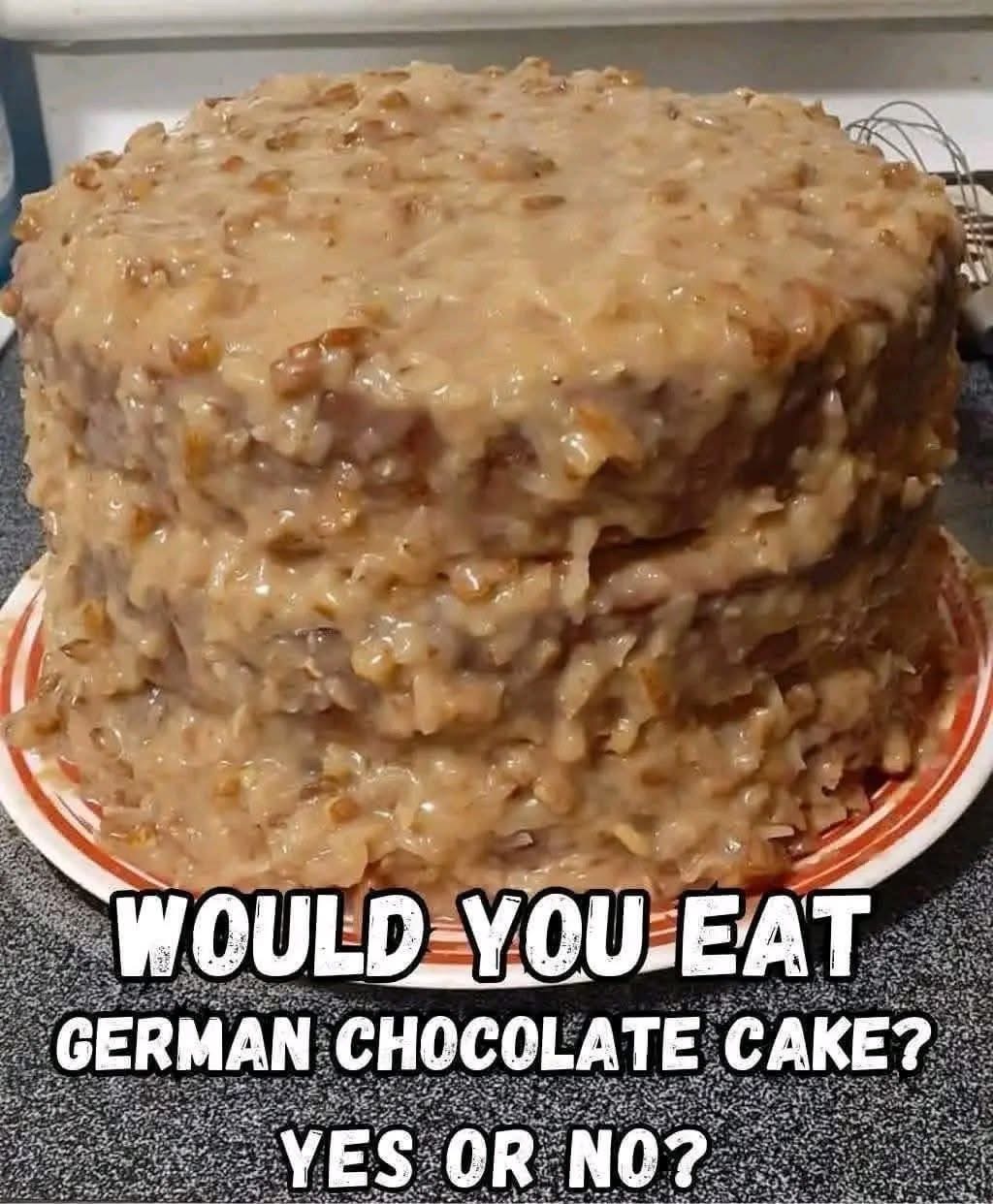
Here is the complete guide to German Chocolate Cake, following the same structure as your previous requests.
Introduction
German Chocolate Cake is an indulgent, multi-layered dessert known for its light, tender chocolate cake and its signature coconut-pecan filling and frosting. Unlike traditional chocolate frostings, this cake features a rich, caramel-like topping that is generously spread between each layer and over the top, leaving the sides often bare to showcase its decadent texture. It is not overly sweet, but deeply nutty, toasty, and complex—a true showstopper for celebrations.
Origin
Despite its name, German Chocolate Cake is not from Germany. It was created in the United States. In 1852, American baker Samuel German developed a dark baking chocolate bar for Baker’s Chocolate Company, named “Baker’s German’s Sweet Chocolate.” In 1957, a Dallas homemaker named Mrs. George Clay submitted a recipe using that chocolate to The Dallas Morning News. Her “German’s Chocolate Cake” became an instant sensation. Over time, the possessive apostrophe was dropped, and it became known as “German Chocolate Cake.”
Cultural Significance
This cake is a beloved classic in Southern and American home baking. It appears at birthdays, Thanksgiving, Christmas, and potlucks—often as the “special” cake reserved for holidays. Its distinct caramel-coconut-pecan frosting sets it apart from all other chocolate cakes. The cake also represents a shift in mid-20th-century baking: using semi-sweet or sweet baking chocolate rather than unsweetened cocoa powder, which was more common at the time. It remains a nostalgic favorite, often passed down through generations.
Ingredients (Quantity for one 3-layer 9-inch cake)
For the Chocolate Cake Layers:
· Baker’s German’s Sweet Chocolate (or semi-sweet baking bar) – 4 oz (113g)
· Boiling water – ½ cup (120ml)
· All-purpose flour – 2 cups (240g)
· Baking soda – 1 tsp
· Salt – ¼ tsp
· Unsalted butter (softened) – 1 cup (227g / 2 sticks)
· Granulated sugar – 2 cups (400g)
· Large egg yolks – 4 (room temperature)
· Vanilla extract – 1 tsp
· Buttermilk – 1 cup (240ml)
· Large egg whites – 4 (room temperature)
For the Coconut-Pecan Filling/Frosting:
· Evaporated milk – 1 can (12 oz / 354ml)
· Granulated sugar – 1½ cups (300g)
· Unsalted butter – ¾ cup (170g / 1½ sticks)
· Large egg yolks – 4 (slightly beaten)
· Vanilla extract – 1½ tsp
· Sweetened shredded coconut – 2 cups (160g)
· Chopped pecans – 1½ cups (180g), toasted
Optional Additions
· Chocolate ganache drip – 4 oz semi-sweet chocolate + ½ cup heavy cream (drizzled over top after frosting)
· Coffee – 1 tsp instant espresso powder dissolved in buttermilk (enhances chocolate depth)
· Bourbon or rum – 2 tbsp added to the coconut mixture for an adult twist
· Sea salt – A light sprinkle of flaky salt over the final frosting
· Extra pecans – Arranged in a ring on top for decoration
· Coconut flakes – Large, unsweetened flakes toasted for garnish
Tips for Success
- Do not substitute the filling for normal frosting – The coconut-pecan mixture is the soul of this cake. Standard buttercream will not taste authentic.
- Toast the pecans – Spread on a baking sheet at 350°F (175°C) for 5–7 minutes. This deepens their flavor dramatically.
- Cool the filling completely – It must reach room temperature and thicken before spreading, or it will slide off the cake layers.
- Whip egg whites separately – Folding in stiff but not dry egg whites creates the light, airy crumb that defines German Chocolate Cake.
- Use room temperature ingredients – Butter, egg yolks, and buttermilk should be at least 65°F (18°C) for proper emulsification.
- Level your cake layers – A serrated knife or cake leveler ensures even stacking.
- Don’t frost the sides – Authentic German Chocolate Cake leaves the sides exposed, showing the dark cake against the golden filling.
Instructions
Make the Cake Layers:
- Preheat oven to 350°F (175°C). Grease and flour three 9-inch round cake pans, then line bottoms with parchment paper.
- Melt chocolate with boiling water in a small bowl, stirring until smooth. Cool slightly.
- Whisk flour, baking soda, and salt in a medium bowl.
- In a large bowl, beat butter and sugar until light and fluffy (3–4 minutes).
- Add egg yolks one at a time, then vanilla and melted chocolate mixture.
- Add flour mixture alternately with buttermilk, beginning and ending with flour (3 additions of flour, 2 of buttermilk). Mix just until combined.
- In a clean bowl, beat egg whites until stiff peaks form. Fold one-third into batter to lighten, then gently fold in the remaining whites.
- Divide batter evenly into prepared pans. Bake 25–30 minutes until a toothpick comes out clean.
- Cool in pans for 10 minutes, then turn out onto wire racks to cool completely.
Make the Coconut-Pecan Filling:
- In a medium saucepan, combine evaporated milk, sugar, butter, and beaten egg yolks. Cook over medium heat, stirring constantly, until thickened and golden brown (about 10–12 minutes).
- Remove from heat. Stir in vanilla, toasted coconut, and toasted pecans.
- Cool completely to room temperature, stirring occasionally. It will thicken further as it cools.
Assemble the Cake:
- Place one cake layer on a serving plate. Spread one-third of the filling over the top (not the sides).
- Add the second layer and spread another third.
- Add the third layer and spread the remaining filling on top only.
- Let the cake stand for at least 30 minutes before slicing to allow the filling to set slightly.
Description
German Chocolate Cake is unmistakable. The cake itself is a deep, mahogany brown, tender, and moist with a fine, velvety crumb. It tastes of sweet chocolate rather than dark or bitter cocoa. The filling is glossy, golden, and thick, studded with chewy shreds of coconut and crunchy, buttery toasted pecans. Each forkful delivers a perfect bite: soft cake, sticky-sweet filling, and textural contrast. The sides remain bare, making the filling look like a cascading treasure on top of dark chocolate cliffs.
Nutritional Information (per slice, 1/12 of cake)
· Calories: ~620–720
· Protein: 9g
· Carbohydrates: 85g
· Sugars: 68g
· Fat: 32g
· Saturated Fat: 18g
· Fiber: 3g
· Sodium: 310mg
· Cholesterol: 155mg
Rich, indulgent, and definitely a “special occasion” dessert.
Conclusion
German Chocolate Cake is not just a dessert; it is a piece of American baking history wrapped in coconut and pecans. Its unique caramelized filling, light chocolate crumb, and exposed sides make it instantly recognizable and deeply loved. While it requires multiple bowls, steps, and patience, the result is a spectacular cake that earns every bit of praise. It is unapologetically rich, deeply nostalgic, and absolutely worth the effort.
Recommendation
Serve at room temperature with strong black coffee, dark roast coffee, or a glass of cold milk. For holidays, plate each slice on a pool of raspberry coulis or a drizzle of salted caramel. If you have leftover filling (rare, but possible), spoon it over vanilla ice cream or spread on toast. Store the cake covered in the refrigerator for up to 3 days, but bring to room temperature before serving for best texture.
Embracing Healthful Indulgence
German Chocolate Cake will never be a “light” dessert—and that is perfectly fine. Healthful indulgence here means honoring the real thing in smaller portions. Use high-quality, real ingredients (no margarine or fake sweeteners). Bake it only for celebrations. Cut a thin slice, eat it slowly, and savor every rich, nutty, coconut-laden bite alongside a cup of tea or espresso. Balance it with a day of nourishing meals and movement. True health includes joy, and a slice of this historic cake is a joyful, soul-feeding experience—not a guilty one.