

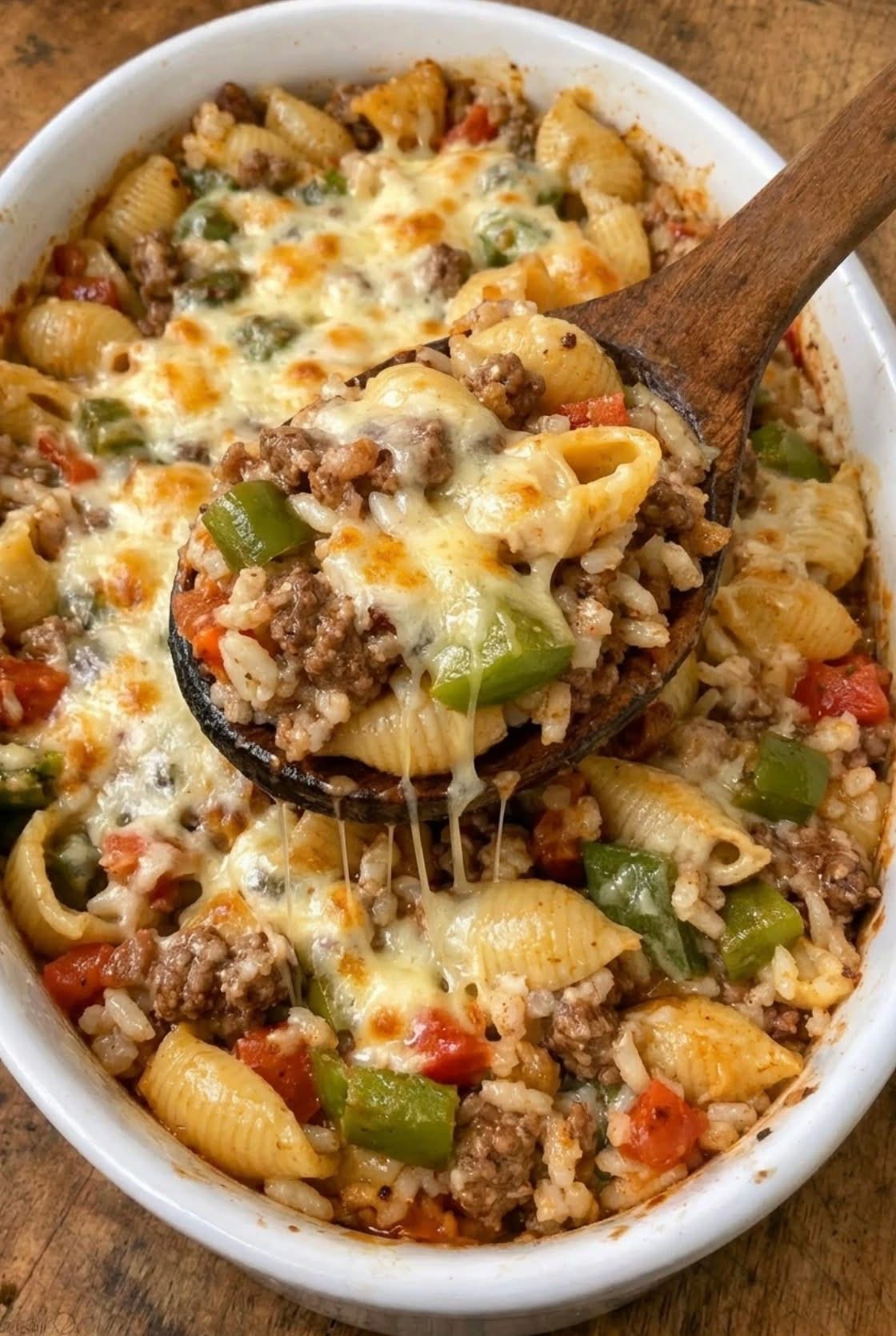
Here is a complete guide to One-Pot Stuffed Pepper Pasta — a deconstructed version of the classic stuffed bell pepper, combining all the flavors in a quick, pasta-based meal.
Introduction
One-Pot Stuffed Pepper Pasta takes the beloved flavors of traditional stuffed bell peppers—savory ground meat, tender peppers, aromatic rice (here swapped for pasta), and a tomato-cheese topping—and transforms them into a speedy, skillet-based dish. No parboiling peppers, no messy stuffing, and only one pot to clean. It delivers the same comforting taste in under 30 minutes.
Origin
Classic stuffed peppers have roots in Spanish and Latin American cuisine (chiles rellenos) and early American cookbooks. The “unstuffed” or deconstructed version emerged in the 2010s with the rise of one-pot pasta recipes and busy home cooks seeking efficiency. Swapping rice for pasta is a modern, crowd-pleasing twist that shortens cooking time while maintaining the dish’s hearty soul.
Cultural Significance
This dish represents the evolution of home cooking: respect for traditional flavor combinations combined with practical innovation. It’s a bridge between generations—grandma’s stuffed peppers and today’s weeknight reality. The one-pot method also aligns with a cultural shift toward less waste, fewer dishes, and more family time around the table.
Ingredients (Quantity for 6 servings)
Base
· Ground beef or turkey — 500g (1.1 lb), lean (85/15)
· Bell peppers — 3 medium (any color: red, green, yellow), diced
· Yellow onion — 1 medium (150g), diced
· Garlic — 4 cloves, minced
Pasta & Liquid
· Small pasta (penne, rotini, or elbows) — 300g (10–12 oz)
· Beef or vegetable broth — 3 cups (720 ml)
· Canned crushed tomatoes — 1 can (15 oz / 425g)
· Water — 1 cup (240 ml)
Seasonings
· Italian seasoning — 1 tbsp
· Paprika — 1 tsp (sweet or smoked)
· Salt — 1 tsp (adjust based on broth)
· Black pepper — ½ tsp
· Red pepper flakes — ¼ tsp (optional)
Cheese Finish
· Cheddar or mozzarella cheese — 1 cup (100g), shredded
· Parmesan cheese — ¼ cup (20g), grated (optional)
Optional Additions
· Extra vegetables — Diced zucchini, mushrooms, or spinach (add with peppers)
· Protein boost — Cooked lentils (1 cup) or Italian sausage instead of beef
· Creamy version — ¼ cup heavy cream or cream cheese stirred in at the end
· Herbs — Fresh basil or parsley for garnish
· Topping — Buttery breadcrumbs for crunch (sprinkle before cheese and broil)
Tips for Success
- Use the right pasta — Small shapes with ridges (rotini, penne) hold sauce better than long noodles.
- Don’t over-stir — Stir occasionally to prevent sticking, but constant stirring releases too much starch.
- Dice peppers uniformly — Consistent 1.5 cm (½-inch) pieces ensure even cooking.
- Deglaze properly — After browning meat, add a splash of broth to lift flavorful browned bits from the pan.
- Taste before salting — Broth and canned tomatoes carry significant sodium.
- Cover while simmering — Traps heat and moisture for even pasta cooking.
Instructions
Sauté (8 minutes)
- Heat a large Dutch oven or deep skillet over medium-high heat.
- Add ground meat; cook until browned (5–6 minutes), breaking into small pieces. Drain excess fat if needed.
- Add diced onion, bell peppers, and garlic. Sauté 2–3 minutes until slightly softened.
Combine (1 minute)
- Stir in Italian seasoning, paprika, salt, pepper, and red pepper flakes.
Add liquids & pasta (2 minutes)
- Pour in crushed tomatoes, broth, and water. Scrape the pan bottom to deglaze.
- Add dry pasta (uncooked). Push down so liquid mostly covers it.
Simmer (12–15 minutes)
- Bring to a boil, then reduce heat to medium-low. Cover and simmer until pasta is al dente, stirring every 3–4 minutes to prevent sticking.
- If liquid absorbs before pasta is done, add ¼ cup water as needed.
Cheese finish (2 minutes)
- Remove from heat. Sprinkle shredded cheese over the top. Cover for 1 minute to melt, or broil for 1–2 minutes for a golden crust.
- Garnish with Parmesan and fresh herbs. Serve warm.
Description
The finished dish is a vibrant, rustic medley: tender pasta nuggets bathed in a rich tomato-meat sauce, punctuated by sweet, slightly crunchy bell pepper pieces. The melted cheese creates savory pockets and a golden blanket on top. Each forkful delivers the nostalgic essence of stuffed peppers—sweet, savory, and deeply satisfying—without the fuss.
Nutritional Information (per serving, approx.)
Using lean ground beef (85/15) and cheddar cheese.
· Calories: 520
· Protein: 32g
· Carbohydrates: 55g
· Fat: 20g (Saturated: 8g)
· Fiber: 6g
· Sodium: 780mg
· Vitamin C: 90% DV (from bell peppers)
Conclusion
One-Pot Stuffed Pepper Pasta captures all the soul of the classic dish while respecting your time and patience. It’s proof that shortcuts done thoughtfully—like swapping rice for pasta and skipping the stuffing—can yield something just as delicious, if not more so.
Recommendation
Serve with a crisp green salad and crusty garlic bread to mop up any leftover sauce. Leftovers refrigerate well for 4 days and actually taste better the next day as flavors meld. Avoid freezing pasta-based dishes (texture suffers); freeze the meat-pepper-tomato base instead, then cook fresh pasta when reheating.
Embracing Healthful Indulgence
This dish already includes bell peppers (packed with Vitamin C and antioxidants), but you can make it even more nourishing:
· Boost fiber — Use whole-grain pasta (increase liquid by ¼ cup) or chickpea/lentil pasta for extra protein.
· Reduce saturated fat — Swap ground beef for lean ground turkey, chicken, or plant-based crumbles.
· Add hidden vegetables — Grate 1 carrot and 1 zucchini into the meat mixture; they melt into the sauce undetected.
· Lighten the cheese — Use part-skim mozzarella and reduce to ½ cup, or substitute nutritional yeast for a cheesy flavor with fewer calories.
· Control sodium — Choose no-salt-added crushed tomatoes and low-sodium broth; rely on herbs and garlic for flavor.
· Portion wisely — Serve with a large side of roasted broccoli or steamed green beans to naturally reduce the pasta portion.
By keeping the bell peppers front and center and making small swaps, this one-pot wonder becomes a balanced meal that feels indulgent but fuels your body right. That’s the beauty of deconstruction—you lose the work, not the wellness.