

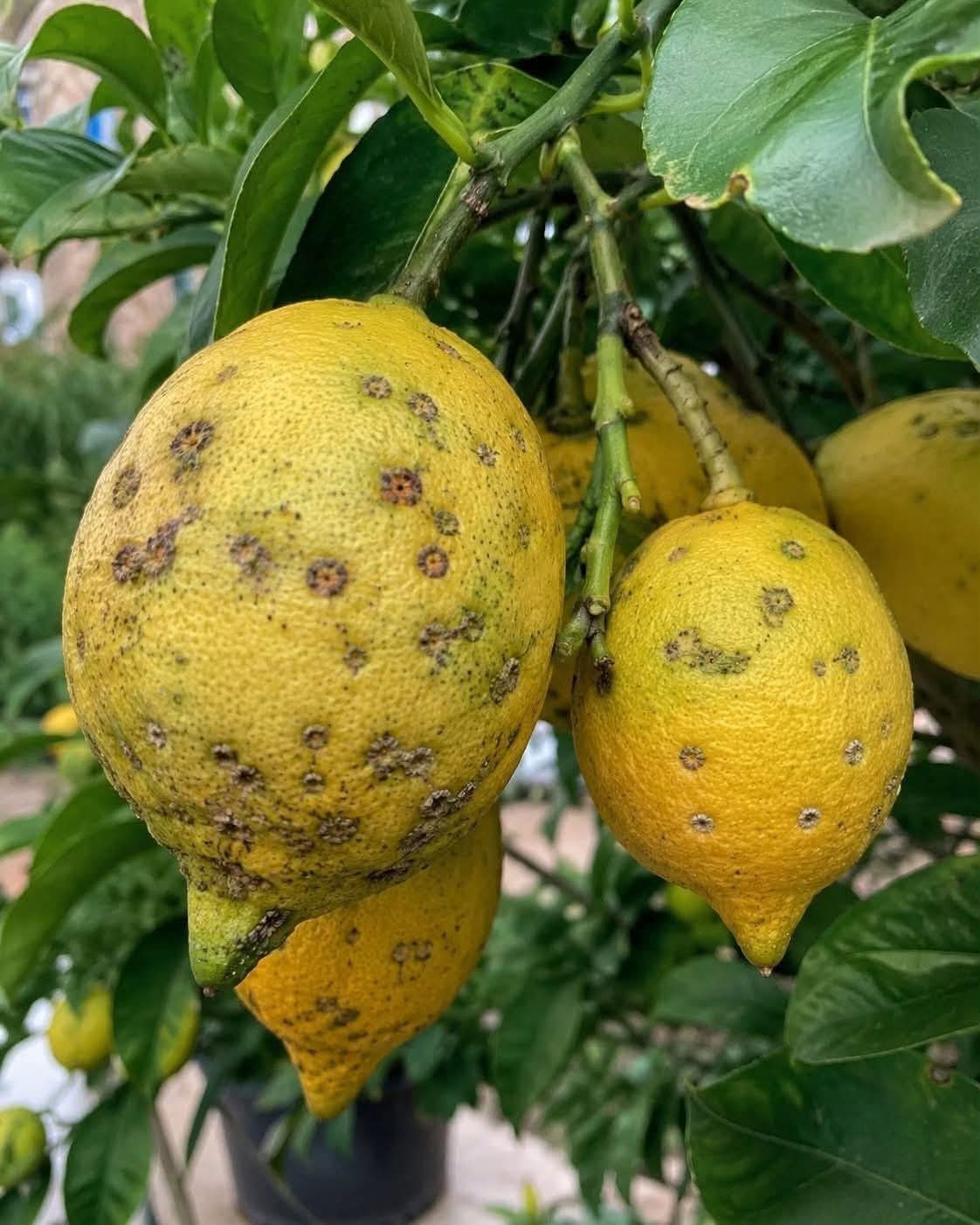
There is a specific, quiet joy that comes from walking out into your backyard or visiting a local grove, looking up at a heavy, fruit-laden citrus tree, and anticipating the bright, zesty reward of your patience. We dream of smooth, glossy, bright yellow lemons that look like they belong in a magazine.
But then, you look a little closer. You notice rough, corky, or silvery-gray scars mottling the skin of the young fruit. It is incredibly easy to feel a sudden pang of disappointment. Did I water it too little? Did I forget to fertilize? Is my beloved tree sick?
Before you feel discouraged, let’s take a gentle, deep breath. Those rough marks are not a sign of your failure as a gardener. They are simply nature’s handwriting, telling a tiny story of the outside world. Let’s gently explore what those marks actually mean, how to tell the difference between a harmless cosmetic quirk and a true garden ailment, and why your “ugly” lemons are still the sweetest ones of all.
🔍 The Tiny Culprit: Citrus Thrips:
Most of the time, when you see flat, silvery, gray, or brown corky scarring on a lemon—especially clustered in patches near the stem end—you are looking at the handiwork of the citrus thrip.
These microscopic little visitors are incredibly small—barely a sixteenth of an inch long! Because they are so tiny, they are almost invisible to the naked eye. They love to feed on the tender, delicate new growth of citrus trees, including the soft skin of young, developing fruit.
As they gently scrape the surface of the rind to feed, they leave behind tiny marks. As the lemon grows and expands, those little scrapes stretch and turn into the rough, corky scars you see on the mature fruit.
The Gentle Truth: Once the scar forms, it will not heal or rub off. It is a permanent part of that lemon’s skin. However, it is purely cosmetic. The fruit is perfectly healthy, and the thrips rarely harm the tree itself. Catching them early in the spring when the fruit is just forming is the best way to minimize the scarring, but remember: a scarred lemon is still a happy lemon.
🍄 The Fuzzy Fungus: Citrus Scab
The Fuzzy Fungus: Citrus Scab
What if the marks don’t look like flat, silvery scrapes, but instead look like raised, corky warts or blister-like growths? If you see these rough, elevated textures on the fruit, the leaves, and the new shoots, you might be dealing with citrus scab.
Citrus scab is a fungal condition that absolutely loves damp, wet, and humid weather. When the spring rains linger, this fungus can settle onto the tender new tissues of the tree.
The Gentle Truth: While seeing warty growths on your leaves and fruit can be startling, citrus scab is largely a cosmetic issue. It will not threaten the overall health or vitality of your beloved tree. It might cause heavily blemished fruit to drop a little earlier than normal, but the tree itself will remain strong and continue to thrive.
🛑 The Serious Neighbor: Citrus Canker
There is a third possibility that requires a bit more attention, though it is less common: citrus canker.
If the lesions on your leaves and fruit are raised and corky, but they are distinctly surrounded by bright yellow, water-soaked halos or rings, this could be canker.
The Gentle Truth: Unlike thrips or scab, citrus canker is a serious bacterial disease. It is highly contagious to other citrus trees. Because it can be difficult to diagnose accurately just by looking at a photograph or a single leaf, it is always best to call your local agricultural extension office or a professional if you suspect canker. They can guide you on how to protect your grove.